

When you’re feeling stressed, you probably do something special to wind you down—take a bath, go for a walk, cuddle your dog—and you probably feel a little calmer after you do.
However, it’s not always so simple to relax. Sometimes, or oftentimes, it feels like there’s no relaxing. You simply can’t shut off your brain.
There are a lot of reasons why you can’t relax. It usually depends on what is causing these anxious feelings.
Why Your Biology is Keeping You From Relaxing
Anxiety, whether chronic or acute, is a physiological response to a perceived threat. While our nervous systems are good at getting us out of danger, they react the same whether the threat is real or not.
The Fight or Flight Stress Responses
Your fight or flight response is controlled by a branch of your nervous system called the sympathetic nervous system. In stressful situations, it tenses your muscles, increases your heart rate, shuts down non-vital systems, and releases stress hormones like adrenaline and cortisol. These help you move faster, stay alert, and react quickly.
How Stress Responses Affect Your Ability to Relax
Chronic stress, anxiety, and even post-traumatic stress disorder (PTSD) can cause your nervous system to get stuck in fight or flight mode.
The reason that you can’t relax is that you’re constantly in “go” mode. Stressful situations and anxiety disorders don’t allow your nervous system to return to rest and digest mode easily. You’re having trouble relaxing because it’s not easy to convince your brain that you’re not in danger when the threat wasn’t real in the first place.

The Stress Cycle
In addition to physiological responses to stress and anxious feelings, another reason you can’t relax is being mentally overstimulated.
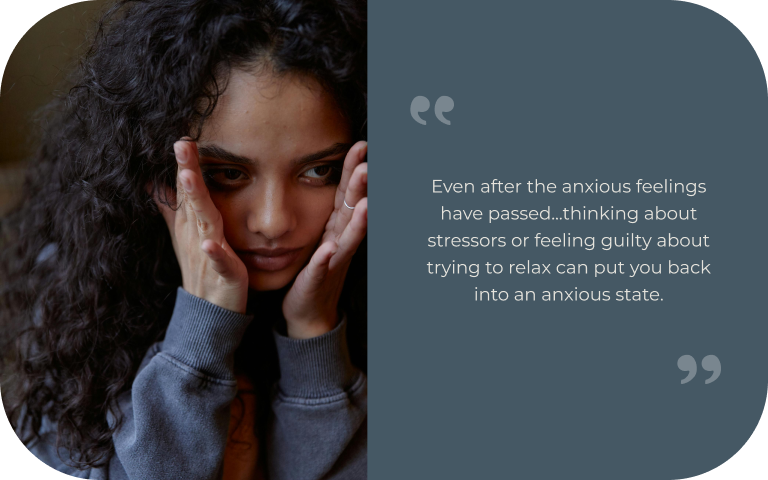
Racing and anxious thoughts can continue even after you feel physically relaxed or the stressor is eliminated. Whether it’s still thinking about what is causing you stress or feeling guilty over relaxing, these racing thoughts can cause you to return to an anxious state.
Counseling for Stress, Anxiety, and Trauma
The best long-term fix for relaxing is treating the root cause of the anxious feelings. Once you understand that, you can learn tools and coping strategies to help you relax and find some calm.
Dialectical Behavioral Therapy
Also called DBT, dialectical behavioral therapy explores the connections between your thoughts, emotions, and behaviors. It teaches you to use tools for mindfulness, distress tolerance, and emotional regulation to calm your nervous system.
Learn more about DBT at Verdant Hope.
Internal Family Systems
Internal family systems is a therapeutic strategy that works on the theory that our minds are divided into different “parts” that make up how we think, feel, and act. With your counselor, you’ll explore different parts of you that might contribute to your anxiety or dictate how you respond to stress.
Learn more about internal family systems at Verdant Hope.
EMDR
Eye movement desensitization and reprocessing (EMDR) is a trauma intervention that reprograms how you remember a traumatic experience.
Memories of trauma don’t get stored in our brains the way normal memories do. They lead to flashbacks that cause anxiety and panic. EMDR trains your brain to process and store those memories correctly, so that they cause significantly less distress.
Learn more about EMDR at Verdant Hope.
Practical and Effective Stress Management
While therapy can reduce anxiety and open the door for relaxation in the long-term, there are things you can do to increase your ability to relax in the moment.
These tools are not big, immediate fixes or cures. They’re small steps to make things a little more manageable. You’ll notice the difference after doing them consistently as a part of your treatment strategy

Somatic Grounding
The body and mind are intricately connected. Your body reacts physically to stress. One way to calm your mind is by doing something physical.
- Focus on your senses. Take inventory of what you can touch, what you can hear, what you can see, and what you can smell.
- Shock your body. Doing a cold plunge, hot yoga, or even drinking an ice-cold glass of water will “distract” your body and mind enough for you to regulate your thoughts and emotions
- Exercise. Even light physical activity can improve your mood and make you feel better physically. Small improvements to your mood, when paired with a counseling plan, can help you relax more easily. Stretching or yoga can help you disengage your tense muscles and relax your mind.
Step into Nature
Being outside is proven to decrease anxiety, lower your heart rate and blood pressure, and improve cognitive function. A simple walk through town, a picnic, a rigorous hike, or a bird-watching excursion can help you find moments of calm and feel grounded.
Set Boundaries
Often, eliminating the stressors that occupy your mind can lead you to relax more. Setting healthy boundaries about things like who you spend time with and what you do can stop anxious thoughts before they even start.
Relax and Enjoy Life with Verdant Hope
It can be frustrating to hear “just relax” when you’re struggling. We understand that anxiety, stress, and trauma can keep you from relaxing and enjoying life.
We can help you get to the bottom of your mental health struggles, then break down those barriers that are keeping you from finding inner peace. Our staff has years of experience treating anxiety and chronic stress.
Contact us today to get started.
Take the First Step
Your journey to better mental health starts here. Reach out today to connect with a mental health professional and take the first step toward the life you deserve.