


Being a teenager has never been a walk in the park, but burnout from school can add another layer to this tumultuous stage of life. Between studying, socializing, extracurricular activities, work, and planning for college, it can all quickly add up and become too much.
Just like adults, adolescents can experience burnout that has long-term consequences if it’s not treated. This article will discuss why adolescents get burnt out, what it looks like, and what to do to overcome it.
Being Burnt Out vs Being Tired
Let’s start with what burnout is. It’s a term that has been incorporated into our everyday lexicon to describe being tired or “done” with something. In psychology, burnout is a phenomenon that goes beyond normal fatigue.
Burnout is a state of chronic stress and fatigue that leads to physical, emotional, and cognitive exhaustion. It can come from doing too much or feeling like your life is made of only things that bring no fulfillment or joy. Though it’s not a diagnosable mental health condition, mental health professionals recognize it as something that can deeply affect someone’s life.
It’s true, feeling tired and overworked can absolutely be detrimental to one’s mental and physical health. However, burnout is more long-term and generally more severe.
How Student Burnout Develops
Teenagers and adolescents experience burnout from many angles, but mostly from school—both academics and extracurricular activities contribute. High school students are finding their way socially while at the same time preparing for the rest of their lives. It’s a lot to balance on those shoulders, and they haven’t yet learned the tools they need to set boundaries, schedule correctly, and process their emotions. When certain stressful situations are introduced, those teens can feel everything pile up, and then they get burnt out.
These are a few of the most common situations that lead to student burnout.
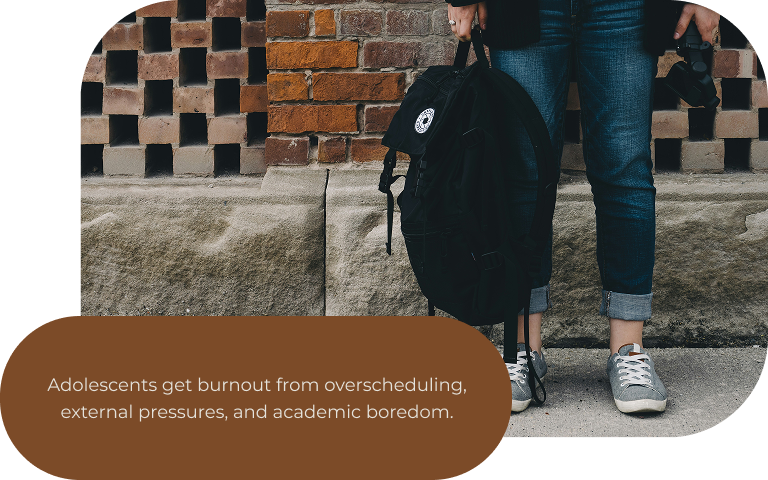
Pressure About Performance and the Future
Especially in those last few years of high school, the pressure to go to college and do well is at the top of a lot of teens’ minds. It’s the final stretch for good grades, high-level classes, and joining clubs that look good on college applications.
Just the anxiety about the future can lead to burnout for many adolescents. They worry about immediate and future consequences of poor performance, so they over-extend themselves to make sure they do well academically.
Overscheduling
Overscheduling often goes hand-in-hand with this academic pressure. For example, let’s discuss students who are in mostly advanced courses. They may go to school the same hours as all of their other peers, but they often have to study more for intense tests, and their homework load may take hours each night. Their schedule is filled with after-hours work that cuts into things that may help them relax.
Even if you remove the pure academics from the equation, clubs and organizations, sports, and their jobs can also lead to no free time. Teenagers generally need nine hours of sleep each night. But overscheduling can either cut into this sleep time or give students no time to themselves if they want a full night’s rest.
Academic Boredom
It might seem counterintuitive, but boredom is also a contributor to burnout. Mental stimulation, in the right quantities, makes people feel invigorated and excited. When students are challenged in the right way, they are more likely to be engaged with their studies.
However, some circumstances lead to students feeling no challenge at school. Things start to feel pointless, and they may check out, not taking in any information. It can happen when they take classes too far below their level or classes they have no interest in.
Academic boredom also happens when someone is underscheduled. If all a teen does is go to school, they don’t get the full spectrum of mental stimulation necessary to exercise their brain.
Recognizing the Signs of Adolescent Burnout
Burnout can be difficult to recognize in teens since it is a naturally stressful time. However, you can look for major changes in someone’s personality or performance. If you’re trying to recognize burnout in yourself or someone else, look for (and, if applicable, talk to that person about) these markers for adolescent burnout.
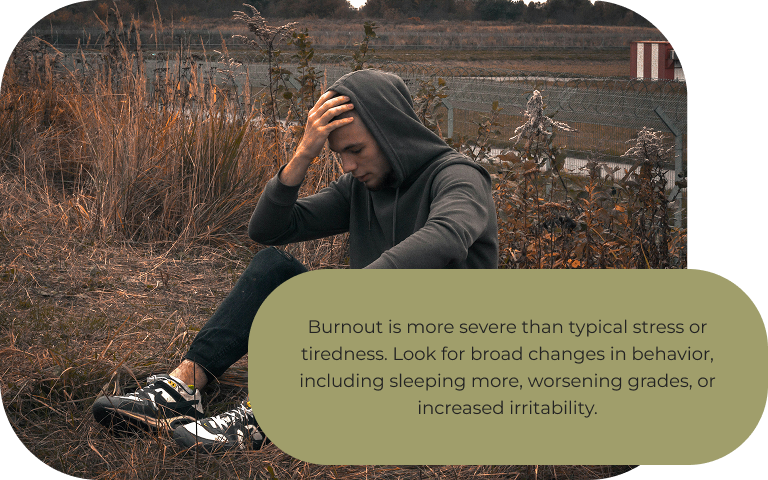
Fatigue
Growing into an adult takes a lot of energy. That nine hours of recommended sleep each night is actually more than most younger children need. While many adolescents need more rest, fatigue from burnout can be quite extreme.
Extreme fatigue can look like:
- Falling asleep in class
- Zoning out frequently
- Drinking an excessive amount of energy drinks
- Sleeping 10+ hours each night
Again, there’s a difference between being tired from a busy week and experiencing burnout. Fatigue from burnout is long-term.
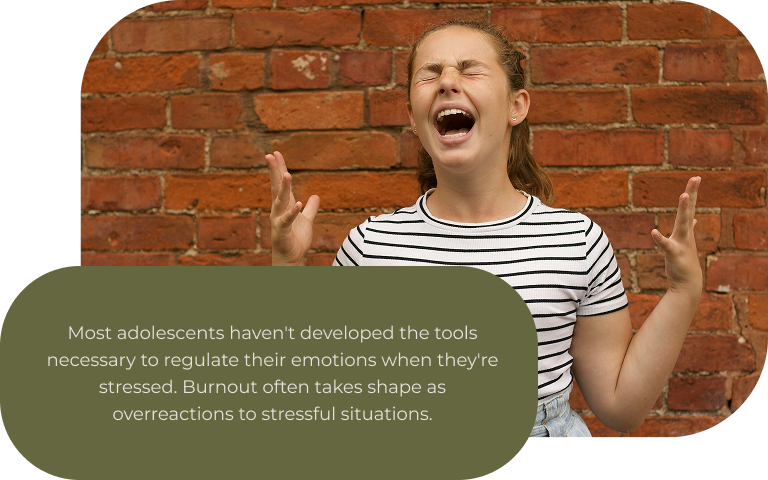
Emotional Dysregulation
Adolescents are sometimes unfairly chastised for their mood swings. Their bodies are changing, and they have a lot of stress thrust upon them about their future.
Just like fatigue, emotional dysregulation caused by burnout is generally more extreme and out of character. It can look like a person crying over a test result, snapping at a friend, or being mad at inappropriate times.
Again, teens don’t often have the tools to regulate extreme emotions. However, to recognize burnout in someone or yourself, look for patterns of reactions that are unusual for that person.
Apathy
People react to stress differently. While some teens with academic burnout react extremely in some situations, others may not react at all.
Some adolescents develop apathy when they’re burnt out. They may disengage from things that once interested them, stop reacting to good or bad news, or have a nihilistic view of the future.
Performance Drops
Fatigue, apathy, and physical reactions to stress, like illness, can cause test scores to go down, athletic performances to decline, and deadlines to be missed.
When a student is burnt out, they have no more to give mentally. It’s common to see a drop in performance academically or in other areas. It’s a difficult symptom to contend with for many because that pressure for the perfect academic record was what caused that burnout in the first place.
Treating Adolescent Burnout
Burnout doesn’t have to ruin anyone’s high school experience. It can be prevented and treated.
What Students Can Do to Overcome and Prevent Burnout
If you’re a student experiencing burnout or feel you’re on the edge of it, it might be time to talk to someone and get to the root of why it’s happening.
Talk to your parents about your workload. They can help you find the best places to disengage from and regain some time dedicated to your mental health.
You can also talk to a school counselor or academic advisor. They may be able to guide you through your goals, and find out what you can drop while still being on-track towards your academic goals.
Counseling for Adolescents
It’s normal for a lot of young people to feel guilty asking for help or to not know what kind of help they need. Counseling is one way to find your voice and your path.
At Verdant Hope, we offer counseling for adolescents, teens, and young adults that addresses their unique challenges and needs. We can help you work through your burnout and find healthy coping mechanisms to keep it from happening again.
Learn more about teen counseling at Verdant Hope, and get to know two of our clinicians who specialize in teen counseling: Paul Collins and Michelle Prem.
What the Adults Can Do to Help
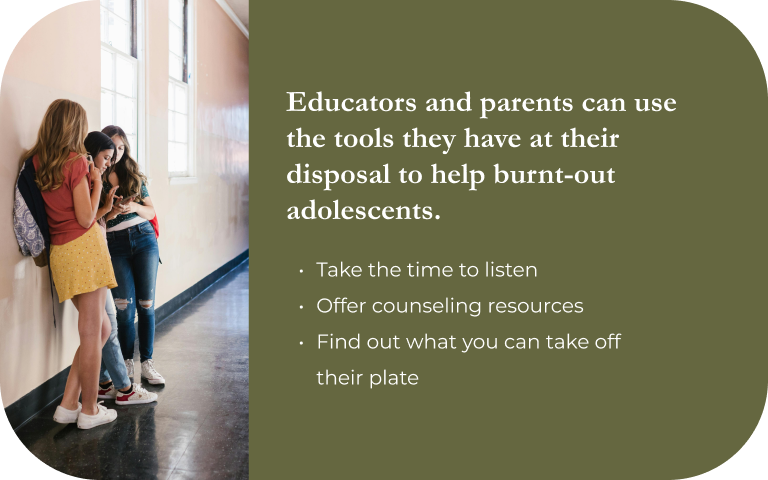
Parents and educators are in a position to help adolescents experiencing burnout as soon as they identify symptoms.
If you’re an educator or guardian to a teen, keep an eye out for new patterns in their behavior, their grades, and their emotions. Check in on them. Give them a safe space to open up about what they’re going through and what they’re feeling.
Teachers and educators have access to resources to give teens someone to talk to, or learn how to talk. They can help students adjust their coursework or find ways to bring more balance into their lives.
Parents and guardians can help students reach out to a therapist, pull them from different activities, and communicate with teachers about how their child is struggling.
Sometimes, adolescents just need to know that someone is looking out for them. They’re more likely to open up if you show concern and care rather than frustration or disappointment. Use your life experiences and resources to help students with burn out.
Burnout Treatment at Verdant Hope
It’s easy to ignore how you’re feeling in the present to focus on some future goal. Adolescent burnout can often go as “normal stress” that all students go through. In reality, it can affect their future if it goes untreated.
We can help students identify the root causes of their stress and create healthier boundaries. Therapy provides space to process emotions and explore sustainable coping strategies.



Take the First Step
Your journey to better mental health starts here. Reach out today to connect with a mental health professional and take the first step toward the life you deserve.