


Teacher Burnout: Signs, Causes, Statistics, and How to Avoid It
Teacher burnout is not an isolated issue; it’s a growing crisis affecting professionals across the educational system. While much of the conversation centers on classroom teachers, burnout impacts educators in many roles, including counselors, instructional aides, administrators, and academic support professionals.
In this article, we’ll cover everything you need to know about teacher burnout, including:
- What it is
- How it affects educators
- Signs
- And how to avoid it
What is Teacher Burnout?
Teacher burnout is a state of chronic physical, emotional, and mental exhaustion caused by prolonged stress in the education profession.
Unlike temporary stress or a difficult school year, burnout develops gradually and does not resolve with short breaks alone. It can affect an educator's mental health, job performance, and overall quality of life.
Teacher burnout consists of three core components:
- Emotional Exhaustion - feeling drained, depleted, or unable to cope
- Depersonalization - emotional distancing from students or colleagues
- Reduced sense of accomplishment - feeling ineffective or inadequate despite effort
Because burnout builds over time, many teachers don’t recognize it until it becomes severe.
Teacher Burnout Statistics
Teaching is one of the leading professions for burnout. In 2025, the number of teachers who self-reported burnout was 53%, and while that did drop from 2024, it’s still one of the highest percentages for all professions.
Studies show that the most common source of job-related stress, regardless of years of experience, was managing student behavior.
Statistics also show that some of the bigger stressors for teachers are administrative tasks and salary issues. Other issues involve feeling expectations are unattainable, working outside of contract hours, and taking time off.
Why Do Teachers Get Burnt Out?
Teacher burnout is usually caused by a combination of high demands, limited support, and chronic stress without adequate recovery. It’s rarely a result of a single factor.

Excessive Workload and Long Hours
Teachers often work far more than contracted hours. Between lesson plans, grading, answering emails, professional development, and administrative tasks, work regularly spills into evenings and weekends.
Over time, the lack of work-life balance leads to physical, emotional, and mental exhaustion.
Emotional Labor and Compassion Fatigue
Educators support students academically, socially, and emotionally. Being a teacher requires a level of emotional presence, as teachers often absorb the stress, trauma, and behavioral challenges of their students.
These ongoing challenges can lead to compassion fatigue and burnout.
Lack of Support and Resources
It seems like every year, teachers are asked to do more, but aren’t given any more resources to support them in those responsibilities.
Many teachers report feeling unsupported by administration or overwhelmed by unclear expectations. Limited resources, staffing shortages, and inconsistent policies can make teachers feel powerless and undervalued.
Classroom Management Challenges
Large class sizes, behavioral issues, and insufficient support staff add to the daily stress. Managing these challenges while still meeting academic expectations creates constant pressure.
Performance Pressure and Accountability
Standardized testing, evaluations tied to performance metrics, and public scrutiny place teachers under intense pressure. Feeling constantly assessed or judged increases anxiety and reduces job satisfaction.
Poor Work-Life Balance
Educators are often asked to do work outside of work hours. Putting in work time when they should be taking time to relax and replenish.
When work is constantly intruding on personal time, recovery becomes impossible. Many teachers experience guilt for setting boundaries or taking time off, which accelerates burnout.
Signs of Burnout
Recognising the signs of teacher burnout early can prevent it from developing into a more severe issue.
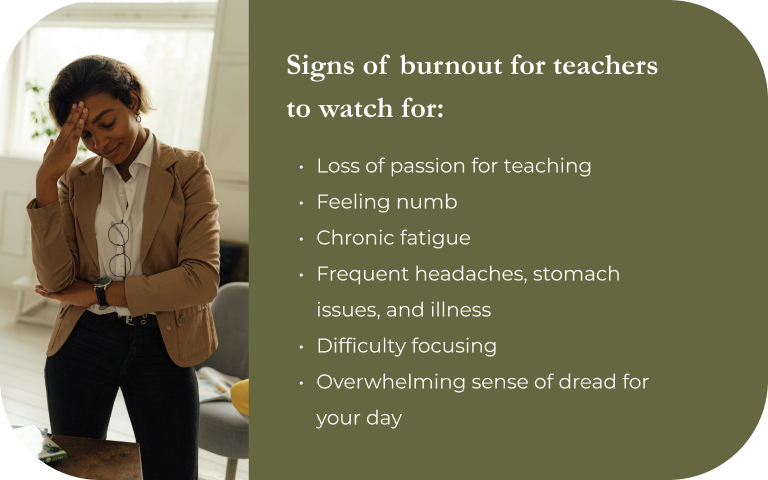
Emotional Signs
- Persistent irritability or mood changes
- Feeling numb, detached, or emotionally drained
- Loss of passion or motivation for teaching
Physical Signs
- Chronic fatigue, even after rest
- Frequent headaches, stomach issues, or illness
- Sleep problems or changes in appetite
Cognitive and Behavioral Signs
- Difficulty concentrating or making decisions
- Increased absents
- Withdrawal from colleagues or students
Professional Warning Signs
- Dreading the school day
- Feeling ineffective or “not good enough”
- Regularly thinking of leaving education
Burnout is a sign that something needs to change.
How Teacher Burnout Impacts Mental Health and Job Performance
Educator burnout is closely linked to anxiety, depression, and chronic stress. Over time, unaddressed burnout can lead to serious mental health concerns, including emotional numbness, hopelessness, and loss of identity outside of work.
Professionally, burnout can reduce creativity, professional effectiveness, and classroom engagement. Educators may feel disconnected from students, struggle to maintain enthusiasm, or question their competence, despite years of experience and dedication.
Burnout has become normalized; teachers suffer silently, and schools lose talented educators who simply need support.
How to Avoid Teacher Burnout
Systemic change is essential, but there are evidence-based strategies that can help reduce the risk of burnout. Learning how to avoid teacher burnout starts with recognizing limits and prioritizing mental health.

Set Clear Boundaries Around Work
Protecting time outside of school hours is critical. This may require you to have a conversation with the administration. In some cases, working outside of work hours is a requirement. However, starting the conversation may help you find ways to set healthier boundaries.
A good place to start is to intentionally schedule rest.
Prioritize Mental Health
Educators can support their mental health in the same way everyone else can.
Therapy, counseling, mindfulness practices, and stress-management strategies can help process emotional labor and prevent burnout from escalating.
Even adopting smaller practices like micro-meditation can help teachers manage stress during work hours.
Build a Support System
Connecting with colleagues, mentors, or mental health professionals reduces isolation. Sharing your personal experiences can help you manage stress and provide emotional relief.
A support system can be instrumental in encouraging you to advocate for yourself and keep pursuing what you love.
Advocate for Change
Although burnout in the educator community is common, it shouldn’t be accepted. Burnout is not an individual’s fault. It’s a systemic issue plaguing teachers.
Teachers can advocate for manageable workloads, mental health resources, and supportive policies. Collective action helps shift burnout from a personal issue to an organizational priority.
When Teacher Burnout Becomes a Mental Health Concern
Burnout leads to anxiety and depression. If left untreated, symptoms often become worse and worse. Any amount of burnout can lead to a mental health crisis. If you’re starting to notice the warning signs of teacher burnout, reach out for support as soon as you can.
Addressing Burnout With Verdant Hope
Teachers do important work, and their dedication rarely goes unnoticed. It’s often a thankless job with long hours and stressful days.
Don’t wait for a break; address burnout by receiving mental health support from Verdant Hope. We love supporting teachers while they dedicate their professional lives to educating future generations.



Take the First Step
Your journey to better mental health starts here. Reach out today to connect with a mental health professional and take the first step toward the life you deserve.