


Have you ever wondered why younger generations seem to have higher rates of neurodivergence than adults? The truth is: many adults are neurodivergent too, but their differences are less likely to be identified.
While neurodivergence in children and teens is increasingly recognized and accepted, it remains widely overlooked in adults. This lack of recognition leaves many neurodivergent adults without the validation, support, or guidance that they need and deserve.
In this guide, we’ll take a look at what neurodivergence looks like in adults, how it’s defined, and how the right support can empower neurodivergent adults to live life on their terms.
Signs of Neurodivergence in Adults
According to a recent poll published by YouGov, 30% of Americans under 30 identify as neurodivergent, while only 6% of Americans over 65 do. While several factors are at play here, one of the biggest reasons for this disparity is that neurodivergent traits often go unrecognized in adults.
For many neurodivergent adults, childhood meant learning to hide the very traits that made them unique. Rather than being given the opportunity to explore their differences and learn how to live life with them, they were forced to adopt masking behaviors to fit in and appear “normal”.
One study found that neurodivergent masking behaviors can lead to exhaustion, isolation, poor mental and physical health, and loss of identity. In addition to these challenges, this study also confirms that camouflaging neurodivergent symptoms leads to a delay in formal diagnosis.
Neurodivergent Symptoms in Adults
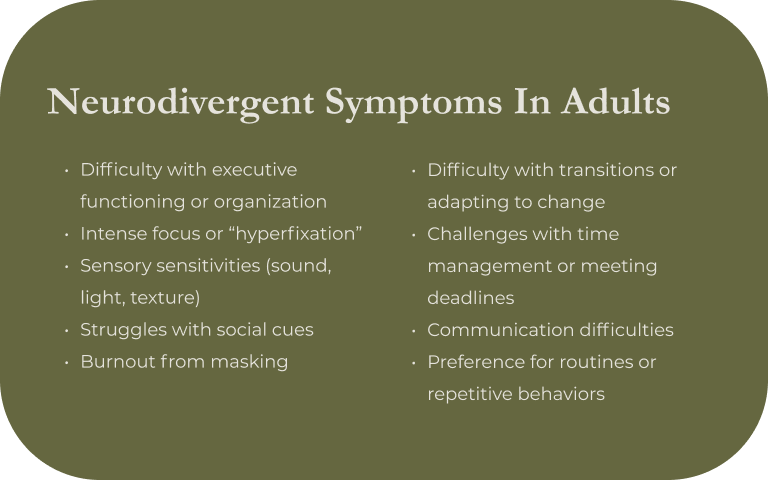
Many neurodivergent adults face the same symptoms that they did as children. These symptoms can include:
- Difficulty with executive functioning or organization
- Intense focus or “hyperfixation”
- Sensory sensitivities (sound, light, texture)
- Struggles with social cues
- Burnout from masking
- Difficulty with transitions or adapting to change
- Challenges with time management or meeting deadlines
- Communication difficulties
- Preference for routines or repetitive behaviors
Instead of finding ways to mask these symptoms and live a life that others call “normal,” in many cases, neurodivergent adults can and should find ways to better understand and embrace their differences. By adopting healthier coping strategies, they can learn how to navigate life while living as their authentic selves.
Neurodivergent? Thriving as Your Authentic Self is Possible
Navigating neurodivergence as an adult can feel overwhelming and isolating at times, but you don’t have to do it alone.
At Verdant Hope Counseling, working with neurodivergence and its associated life experiences is common. Our therapists offer Neurodivergent Adult Counseling that helps neurodivergent adults navigate challenges, build confidence, and thrive in everyday life.
Reach out today to connect with our mental health professionals and take the first step towards the life you deserve.
Deep Dive: What Is Neurodivergence?
Neurodivergence is a broad term used to describe brains that function differently from the neurotypical standard. It refers to variations in sensory processing, motor skills, social comfort, cognition, and attention.
While the term was originally associated with autism, it has since become an umbrella term that encompasses a wide range of neurological differences. These differences in brain function play a large role in how someone experiences and interacts with the world around them.
Neurodivergent Meaning
So, what does it really mean to be neurodivergent? By definition, neurodivergent individuals think, feel, and behave differently from those with neurotypical brains. While this presents several challenges, it also brings unique strengths, perspectives, and ways of solving problems.
Since modern life wasn’t designed with neurodivergence in mind, it can be extremely challenging to adapt to societal norms, especially when it comes to school, work, and relationships. Some of the challenges that neurotypical adults face in daily life include emotional dysregulation, interpersonal conflicts, and low perception of self-worth.
Despite these challenges, neurodivergent brains often excel in areas that neurotypical brains may not. They can offer heightened creativity, deep focus on subjects of interest, innovative problem-solving, and unique perspectives. Navigating daily life may be difficult, but these strengths highlight the valuable contributions that neurodivergent individuals bring to their communities and workplaces.

Neurodivergent Disorders
Neurodivergence isn’t a disorder itself. It refers to a wide range of differences that aren’t considered to be “normal”. That being said, there are several disorders that fall under the umbrella of neurodivergence.
Some of the most common neurodivergent disorders include:
- Autism Spectrum Disorder (ASD)
- Attention-Deficit/Hyperactivity Disorder (ADHD)
- Dyslexia
- Dyscalculia
- Dyspraxia
- Tourette Syndrome
- Obsessive-Compulsive Disorder (OCD)
- Sensory Processing Disorder (SPD)
This can be confusing at times, but someone doesn’t have to be diagnosed with one of these disorders to be considered neurodivergent. While these are specific examples of neurodivergence, it can also include anyone with differences in brain function, cognition, and behavior that differ from the neurotypical standard.
Therapy for Neurodivergent Adults
Therapy can be a helpful and supportive space for neurodivergent adults to explore their experiences and better understand their unique traits. It also offers practical strategies for managing daily challenges and building confidence in everyday life.
Some of the therapies that can benefit neurodivergent adults include:
- Neurodivergent Adult Counseling
- Dialectical Behavior Therapy (DBT)
- Internal Family Systems (IFS)
- Cognitive Behavioral Therapy (CBT)
Some therapists use a neurodiversity-affirming approach, which means they see neurodivergence as a natural part of who you are—not something that needs to be “fixed.” Working with a therapist (like each clinician on our team) who embraces this approach can make the healing process more empowering and affirming.
At Verdant Hope, we provide affirming, individualized care that celebrates neurodivergent strengths while addressing their challenges. Our approach is supportive, empowering, and centered on helping you thrive as your authentic self.


Take the First Step
Your journey to better mental health starts here. Reach out today to connect with a mental health professional and take the first step toward the life you deserve.